FLL Competition Prep
Students join a FIRST LEGO League team and prepare for the season — hands-on robot construction, mission strategy, coding and teamwork, guided by coaches who've taken teams to district finals.
Competition is where everything we teach comes together: kids engineer under a real deadline, defend their design decisions to judges, and learn that losing a round is data, not defeat.
- Competes on a real FIRST LEGO League team
- Engineering notebook and presentation skills
- Teamwork under real deadlines
- Public speaking in front of real judges
The learning pathway
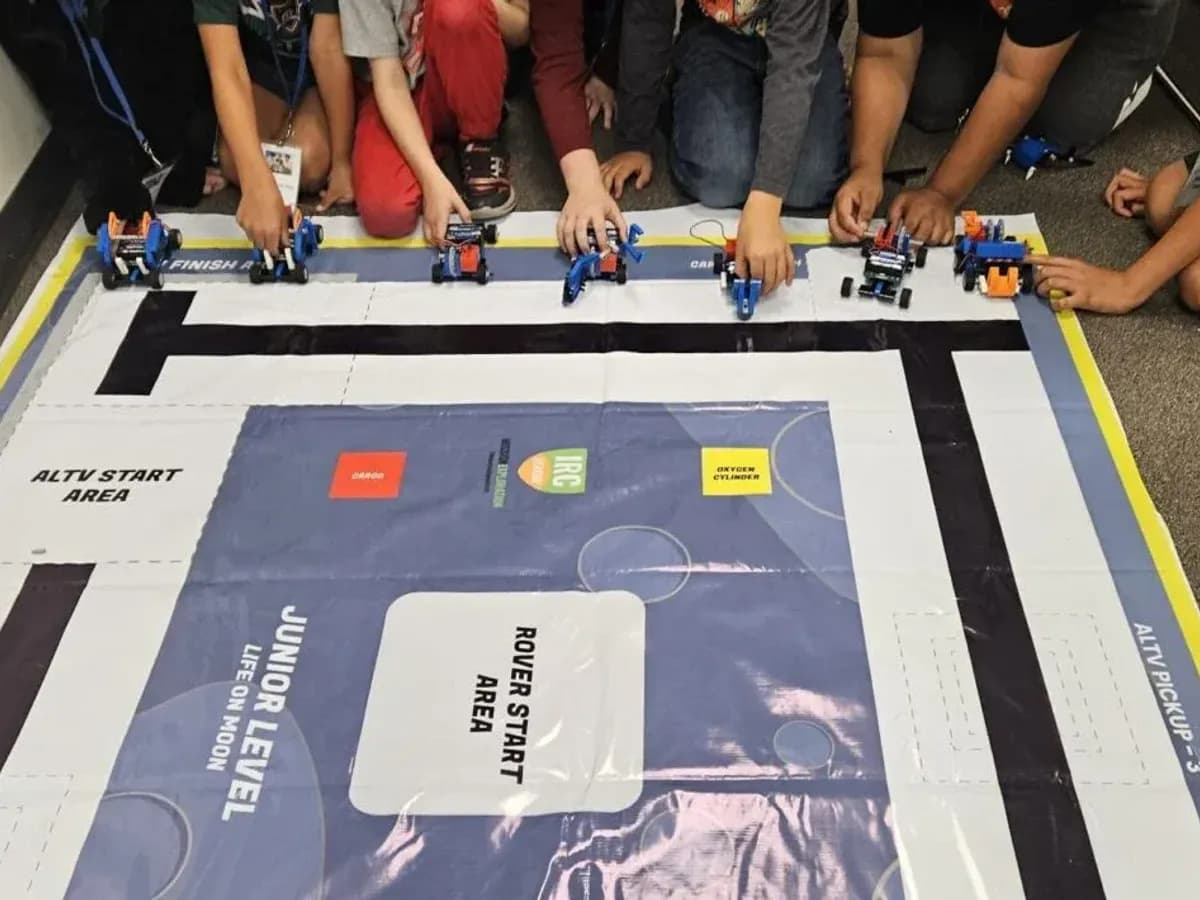
• Robot Game — build and program a robot to score missions on the season's official table, iterating designs week over week.
• Innovation Project — identify a real-world problem tied to the season theme, invent a solution, and present it to judges.
• Core Values & Teamwork — the judged heart of FLL: discovery, inclusion, impact and fun, practiced in every session.
• Engineering Notebook — documenting decisions, tests and results like a professional team.
• Scrimmages & Presentation Practice — mock judging rounds so tournament day feels familiar, not frightening.
Current sessions
Pick the campus and schedule that works for your family.
Parents often ask
What is FLL (FIRST LEGO League)?
FLL is the world's largest robotics program for ages 4–16, run by the FIRST foundation. Teams build and program a LEGO-based robot to complete missions on a themed game table, and also research and present an innovation project. It's part engineering contest, part science fair, part team sport.
Which FLL division will my child be in?
FIRST LEGO League runs three age divisions. Discover is for ages 4–6, Explore for 6–10, and Challenge — the one with the robot game and tournament table — for ages 9–16. We place each child in the division that matches their age and readiness.
When does the season happen?
FLL kicks off with a new game reveal each August; qualifying tournaments run November through January, with finals into February. Our prep classes run year-round, so teams enter the season already comfortable with the robot, the software and each other.
What will my child actually learn?
The robot is the visible part. Underneath it: staying with a hard problem for months, dividing work in a team, documenting engineering decisions, and standing in front of judges to explain their thinking. Those skills outlast any one season — competition just makes practicing them exciting.
What's the purpose if we're not aiming for trophies?
Winning is fun, but the growth is the goal. A season teaches kids to handle deadlines, setbacks and public presentation in a supportive setting — and college admissions increasingly recognize FIRST participation for exactly these reasons.
Does my child need robotics experience to join a team?
No. We place kids by age and experience — beginners start in prep classes that build the skills, and join a competition roster when they're ready. Ambitious beginners have gone from first class to first tournament in a single season.